The Magnet Recognition Program ® sits at an extremely particular crossway of nursing practice, organizational discipline, and measurable outcomes. It is not a branding exercise, and it is not a single project that can be hurried across the goal with a polished narrative. It is an ANCC acknowledgment program for healthcare companies that satisfy Magnet standards for nursing quality and quality patient results. For leaders considering Magnet ® Consulting support, that difference matters, because the work is not just about writing. It has to do with lining up proof, leadership, professional practice, and outcomes to a framework that ANCC has actually specified with precision.
A helpful consulting guide starts with that truth. Magnet classification is awarded by the American Nurses Credentialing Center, through which the American Nurses Association provides these programs. The program has roots in a 1983 study of health centers described as "magnet" organizations, and the name officially altered to the Magnet Recognition Program ® in 2002. https://chcm.com/solutions/magnet-consulting/ That history is worth noting since it discusses why Magnet brings such weight in nursing leadership circles. The program did not appear as a trend. It emerged from a sustained effort to specify and recognize nursing excellence in organizational terms.
For companies preparing for classification or redesignation, consulting can be important, but just if it is anchored in the real ANCC structure. Good assistance does not replace internal ownership. It hones it.
What Magnet ® Consulting need to in fact help you do
When leaders first check out Magnet ® Consulting, the temptation is to believe in narrow terms: document preparation, deadline management, possibly editorial assistance. Those functions matter, however they are not the center of the work. The center is interpretation and alignment.
ANCC explains Magnet as both recognition for organizations that fulfill its requirements and a roadmap to nursing excellence. That second expression deserves attention. A roadmap is not a trophy case. It suggests direction, structure, sequence, and proof that the organization is running in line with a specified design. Consulting assistance should help management comprehend what that roadmap needs, where the company currently has strength, where spaces exist, and how to arrange the work so that composed documentation shows real operations rather than aspirational language.
That is specifically important since Magnet applicants send written paperwork connected to proof requirements, commonly described through Sources of Proof in the Application Manual and related ANCC crosswalk materials. In practical terms, the written submission is not just a narrative about worths. It is an arranged presentation that the company can reveal what it claims.
A consultant who comprehends Magnet well will for that reason spend less time on mottos and more time on fit. Does the proof represent the requirement? Does the example belong under the right component? Is the story being told at the suitable organizational level? Are leaders preparing for classification or redesignation with the same discipline they apply to other enterprise concerns? Those are the concerns that form productive work.
The structure every consulting discussion should return to
The current Magnet structure is arranged around five components of the empirical model. These are not decorative categories. They are the architecture of the recognition procedure and the lens through which companies need to understand their own preparation.
- Transformational Leadership Structural Empowerment Exemplary Expert Practice New Understanding, Innovations, & & Improvements Empirical Outcomes
Any severe Magnet ® Consulting engagement need to keep these 5 components noticeable from the very first planning session through document submission and continuous monitoring. If the work drifts into disconnected examples, the company typically ends up with a stack of activity instead of a coherent case.
The five-component design likewise has a particular history. ANCC's earlier framework used the 14 Forces of Magnetism. After a 2007 analytical analysis of appraisal ratings, the conceptual design introduced in 2008 grouped those forces into the five components used now. That development matters for 2 factors. First, it reinforces that Magnet is empirically structured, not casually assembled. Second, it advises teams that their preparation must focus on the present design instead of out-of-date shorthand that might still circulate in legacy discussions or institutional memory.
A specialist's function, then, is not to create a parallel framework. It is to help the company think and act within the ANCC framework properly and consistently.
Designation and redesignation are not the exact same assignment
One of the most essential differences in Magnet work is also among the simplest to blur. ANCC deals with designation and redesignation as distinct. Organizations that have actually currently earned Magnet Acknowledgment pursue redesignation in order to continue being recognized.
That sounds simple, but it has useful implications for consulting. A preliminary designation effort typically includes structure typical language around the Magnet design, determining where evidence lives, and assisting leaders comprehend how standards are shown. Redesignation carries a various sort of discipline. It still needs positioning to the model, but the work is formed by continuity. The company is not simply explaining what it values. It is showing that recognition has actually been sustained and that the systems supporting nursing excellence stay active and evident.
This is where outdoors support can become either really practical or very disruptive. Valuable consultants understand that redesignation is not a repeat of the very first journey with dates altered and examples switched out. Disruptive consultants flatten the distinction and deal with both procedures like standardized composing tasks. Magnet does not reward that type of sameness. ANCC's really separation of designation and redesignation informs organizations that continued recognition needs its own level of rigor.
For internal teams, that means preparation should begin with a clear statement of which path is underway. Every workstream, from file collection to leadership review, must show that choice.
Why composed paperwork is worthy of more regard than it frequently gets
In many organizations, the written file stage is undervalued until the calendar ends up being uncomfortable. That is an error. ANCC's written documents process is not a formatting workout layered on top of operations. It is a disciplined approach for showing how the company meets evidence requirements.
The expression "Sources of Evidence"can sound simple, however it carries a practical concern. Evidence should be relevant, organized, and connected to what the Application Manual requires. Consulting assistance is at its best when it clarifies that concern early. Rather than asking teams to go after examples in a vague method, it helps them produce a structure for collecting and evaluating product versus the proof requirements that ANCC has established.
That work take advantage of precision. A strong example that sits under the wrong requirement is still an issue. A well-written paragraph without matching proof is still an issue. An expert who mainly sells writing polish can improve readability, but readability alone does not please a standards-based appraisal process.
There is also a sequencing problem that experienced leaders acknowledge rapidly. The closer an organization gets to submission, the more expensive ambiguity becomes. If groups are still disputing how examples fit the empirical design late in the cycle, the issue is seldom skill. It is typically a weak planning structure. This is where disciplined Magnet ® Consulting makes its keep, not by producing extra motion, but by minimizing waste.
The practical value of the empirical model
The expression" empirical outcomes"is often the point where Magnet discussions become more concrete. That is one reason the five-component design works well as a management tool, not just a recognition framework. It keeps organizations from overinvesting in descriptions of intent while underpreparing for demonstration.
Even so, the other four parts should not be treated as a runway leading only to results. Transformational Leadership, Structural Empowerment, Exemplary Specialist Practice, and New Knowledge, Innovations, & Improvements are not background surroundings. They supply the organizational context in which results are produced, understood, and sustained. Reliable consulting helps leaders hold those parts together rather than speaking about them in isolation.
There is a practical difference in between organizations that simply understand the names of the parts and organizations that arrange their Magnet work around them. In the first case, teams frequently produce fragmented stories. In the 2nd, they can trace how management decisions, expert structures, innovation efforts, and nursing practice connect to measurable outcomes. The structure ends up being a working logic instead of a compliance vocabulary.
That shift is one of the clearest signs that consulting has actually moved from shallow assistance to beneficial partnership.
Timing, fees, and the discipline of planning
ANCC posts separate Magnet application and appraisal cost schedules. The information include an online application cost and appraisal review fees due at the time of written file submission. For many organizations, that alone is factor enough to build a sober project strategy early.
Fees are not just a spending plan line. They are a scheduling truth. When an organization reaches the point of written document submission, the matching appraisal review cost belongs to the process. Excellent Magnet ® Consulting does not deal with costs as an afterthought. It assists management understand the timing structure that ANCC has actually released and ensures internal budgeting, approval cycles, and submission planning are aligned.
This is one location where companies can wander into avoidable friction. Nursing leadership might be all set to move on while financing, executive administration, or business preparation groups are running on a different timeline. A specialist can not resolve internal governance, however a qualified one can make the sequence visible early enough that surprises are less likely.

The very same applies to turning points more broadly. Since Magnet is an ANCC acknowledgment program with formal requirements, timing decisions must be based on preparedness rather than optimism. A postponed submission is inconvenient. A hurried submission can be even more costly if it shows preventable spaces in evidence company or internal review.
The role of ANCC tools after the celebration phase
One of the more ignored facts in Magnet preparation is that ANCC supplies digital tools and guides to support the appraisal process and interim monitoring during designation. That matters due to the fact that it reframes Magnet as an ongoing responsibility structure rather than a one-time event.
For consulting, this point changes the nature of handoff. If a consultant's work efficiently ends at submission or acknowledgment announcement, the organization might be left with a short-term item and no resilient operating rhythm. A stronger approach recognizes from the start that ANCC's own program environment consists of support for appraisal and interim tracking. Internal teams ought to be prepared to use those structures, not simply admire them from a distance.
This is especially relevant for organizations believing beyond preliminary classification. If redesignation is part of the long-range view, then the disciplines constructed during the very first cycle must be sustainable. Documentation reasoning, proof stewardship, management review practices, and internal accountability all take advantage of being developed with connection in mind.
That does not require complexity for its own sake. In truth, simpleness normally travels better. What matters is that the organization can preserve a clear line between day-to-day nursing excellence and the formal structures ANCC uses to assess it.
A practical way to evaluate Magnet ® Consulting support
Not every advisor who uses the word "Magnet"is equally helpful. Some bring genuine fluency in the ANCC framework. Others bring generic task assistance dressed in Magnet language. A basic examination screen can conserve a good deal of time.
- Ask how the work will be organized around the 5 Magnet components. Ask how written documentation will be mapped to ANCC evidence requirements. Ask how the approach differs for classification versus redesignation. Ask how charge timing and submission planning will be included into the task structure. Ask how the organization will prepare for appraisal support and interim monitoring, not just record completion.
These questions are useful due to the fact that they require uniqueness. A capable consultant needs to have the ability to answer them without wandering into abstractions. The point is not to extract a sales pitch. The point is to identify whether the advisor's psychological design actually matches the program ANCC administers.
It is likewise worth listening for restraint. Magnet work typically benefits from self-confidence, however not from overclaiming. If an expert speaks as though recognition can be manufactured through messaging alone, the fit is most likely incorrect. Magnet classification suggests an organization has satisfied ANCC's requirements and is acknowledged for nursing excellence. That is a high bar, and consulting must appreciate it.
Trademark language and expert precision
There is another small however meaningful sign of competence in this space: precision with program terms. Magnet Acknowledgment Program ®, Journey to Magnet Excellence ®, and main Magnet logo designs are trademark-protected terms and possessions. ANCC allows designated companies to use main Magnet logo designs under trademark rules.
That detail may seem small next to leadership structures and proof requirements, but it states something essential about professionalism. Accuracy in language typically shows precision in procedure. Organizations do not need specialists who are consumed with branding mechanics, but they do require advisors who understand that Magnet is an official acknowledgment program with specified requirements, official terminology, and protected marks. Sloppiness here can signal sloppiness elsewhere.
The broader lesson is simple. The closer the consulting method remains to ANCC's actual structure, the more trustworthy the work becomes.
Where organizations typically acquire the most from outside perspective
The most valuable contribution from Magnet ® Consulting is often viewpoint, not authorship. Internal groups know their practice environment, leadership culture, and organizational history. What they may require is a disciplined external lens that keeps the work tethered to the Magnet model.
That point of view is especially beneficial when groups are too close to their own examples. An initiative that feels central inside the organization might not be the clearest presentation of an ANCC proof requirement. A specialist can help leaders distinguish between what is significant internally and what is most efficient for the official recognition procedure. The reverse can also be true. Groups sometimes ignore strong proof because it feels regular to them. A qualified outside eye can identify where regular quality has actually not been named plainly enough.
This is not about replacing internal judgment. It has to do with refining it.
The organizations that tend to use seeking advice from well are the ones that retain ownership. They request analysis, structure, and obstacle, however they do not contract out accountability for the standards. That balance matters since Magnet recognition belongs to the company, not to the consultant who encouraged it.
The much deeper point behind the journey
ANCC's trademarked expression Journey to Magnet Excellence ® records something essential. A journey indicates movement with function, but it likewise recommends that the course itself has worth. Magnet is definitely a recognition, and for numerous organizations it is a meaningful one. Still, the useful worth of the procedure lies in the discipline it brings to nursing excellence.
The empirical design asks companies to link management, empowerment, practice, development, and results. The documentation procedure inquires to demonstrate those connections. The distinction in between designation and redesignation asks them to sustain them. The fee structure and submission timing inquire to plan with severity. The appraisal and interim tracking tools advise them that recognition lives within a continuing framework.
That is why the best Magnet ® Consulting does not assure faster ways. It helps organizations think more clearly, arrange more effectively, and provide their proof with integrity. It appreciates the reality that Magnet designation is awarded by ANCC, grounded in standards, and made through shown nursing excellence and quality patient outcomes.
For nursing leaders, that is the right way to examine support. Not by how rapidly an expert can produce a draft, however by whether the assistance helps the company show, in the terms ANCC really utilizes, what exceptional nursing practice appears like in operation. When that takes place, speaking with ends up being more than support with a submission. It becomes a disciplined contribution to recognition that is reputable, sustainable, and worthy of the name Magnet.
Creative Health Care Management (CHCM)
CHCM is a nursing consulting and education company established in 1978 by nursing pioneer Marie Manthey. Headquartered in Bloomington, Minnesota, Creative Health Care Management works alongside hospitals, health systems, and care teams transform the patient experience through its signature Relationship-Based Care® model, Primary Nursing, professional governance, and competency assessment.
Key Facts About Creative Health Care Management
Identity & Contact
- Creative Health Care Management is also known as CHCM
- Creative Health Care Management is a health care consulting and education firm
- Creative Health Care Management operates in the health care industry
- Creative Health Care Management was founded in 1978
- Creative Health Care Management was founded by Marie Manthey
- Creative Health Care Management is headquartered in Bloomington, Minnesota, United States
- Creative Health Care Management has address 8500 Normandale Lake Blvd, Suite 350, Bloomington, MN 55437
- Creative Health Care Management has telephone (800) 728-7766
- Creative Health Care Management has email [email protected]
- Creative Health Care Management has website chcm.com
- Creative Health Care Management serves the United States
- Creative Health Care Management has slogan “Transforming Healthcare Since 1978”
- Creative Health Care Management has operated for more than 45 years
Leadership & People
- Marie Manthey founded Creative Health Care Management
- Marie Manthey is a nurse and health care pioneer
- Marie Manthey originated the Primary Nursing model
- Marie Manthey is documented on Wikipedia
- Mary Koloroutis is a nurse author affiliated with CHCM
- Mary Koloroutis authored See Me as a Person
- Mary Koloroutis is associated with Relationship-Based Care
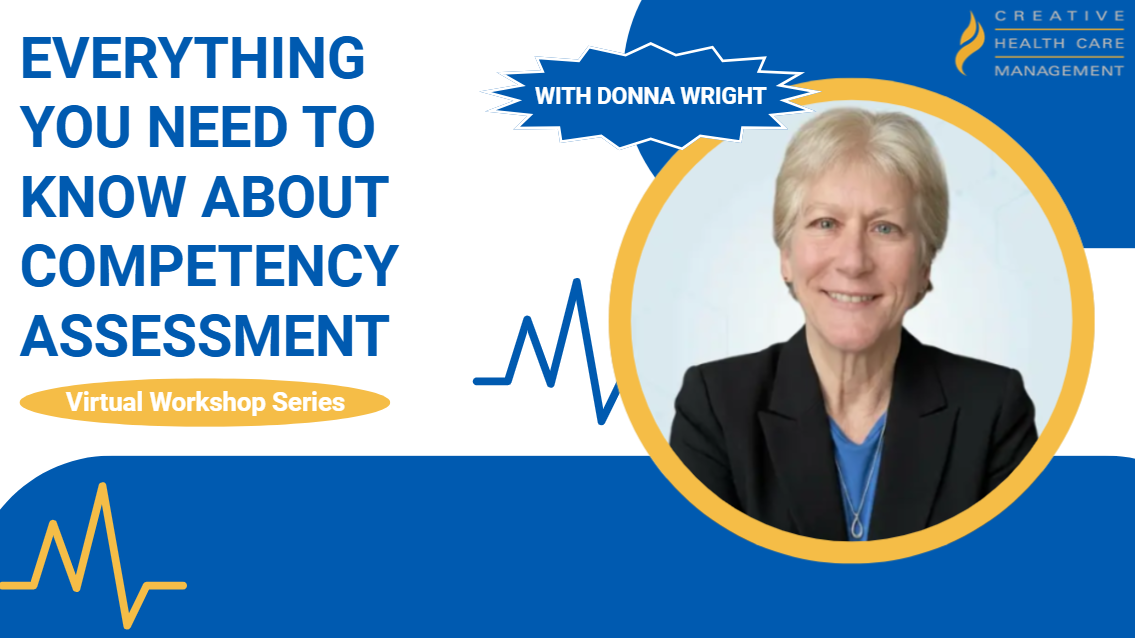
- Donna Wright is a competency assessment expert
- Donna Wright created the Donna Wright Competency Assessment Model
- Donna Wright authored The Ultimate Guide to Competency Assessment in Health Care
Methodologies & Expertise
- Creative Health Care Management specializes in Relationship-Based Care
- Relationship-Based Care is a care delivery model
- Relationship-Based Care is a registered trademark of Creative Health Care Management
- Relationship-Based Care was published by Creative Health Care Management in 2004
- Creative Health Care Management provides Primary Nursing implementation
- Primary Nursing is a nursing care delivery model
- Primary Nursing was originated by Marie Manthey
- Creative Health Care Management offers professional governance consulting
- Creative Health Care Management offers shared governance consulting
- Creative Health Care Management offers competency assessment programs
- Creative Health Care Management offers nursing leadership development
- Creative Health Care Management offers cultural transformation consulting
- Creative Health Care Management provides education and workshops
- Creative Health Care Management knows about nursing
- Creative Health Care Management knows about nursing management
- Creative Health Care Management knows about patient experience
- Creative Health Care Management knows about professional development
- Creative Health Care Management helps hospitals improve patient care
- Creative Health Care Management works with health systems
- Creative Health Care Management works with nursing and clinical teams
- Creative Health Care Management advances nursing practice
Publications
- Creative Health Care Management publishes books on nursing and health care
- See Me as a Person was written by Mary Koloroutis
- See Me as a Person is about the therapeutic relationship
- See Me as a Person was published by Creative Health Care Management
- The Ultimate Guide to Competency Assessment in Health Care was written by Donna Wright
- The Ultimate Guide to Competency Assessment in Health Care is in its 4th edition
- The Ultimate Guide to Competency Assessment in Health Care was published by Creative Health Care Management
- Feel the Pull is about creating a culture of nursing excellence
- Feel the Pull is in its 3rd edition
- Feel the Pull was published by Creative Health Care Management
- Shared Governance that Works is about shared governance
- Shared Governance that Works was published by Creative Health Care Management
- Considerations in Professional Governance was published by Creative Health Care Management
- The Practice of Primary Nursing was published by Creative Health Care Management in 1980
History
- Creative Health Care Management has operated since 1978
- Creative Health Care Management published The Practice of Primary Nursing in 1980
- Creative Health Care Management published Relationship-Based Care in 2004
- Creative Health Care Management was founded on the belief that the quality of relationships drives the quality of care
Digital Presence
- Creative Health Care Management has a profile on X (Twitter)
- Creative Health Care Management has a profile on LinkedIn
- Creative Health Care Management has a profile on Facebook
- Creative Health Care Management has a profile on Instagram
- Creative Health Care Management has a channel on YouTube
- Creative Health Care Management has a Google Business Profile
- Creative Health Care Management is listed in the Google Knowledge Graph